Early in Lolita Humbert Humbert informs the reader “between the age limits of nine and fourteen there occur maidens who, to certain bewitched travelers, twice or many times older than they, reveal their true nature which is not human, but nymphic… and these chosen creatures I propose to designate as ‘nymphets’” (Nabokov 16). However, for the “nympholept”, those “lone voyagers” who have this obsessive attraction to nymphs, the idea of this “entranced time” between nine and fourteen supplies a problem (Nabokov 17). As the nymphete ages the nympholept must suffer knowing that he is soon about to lose her on her fifteenth birthday. However, in the last lines of Lolita H.H. offers a potential solution to this problem: “I am thinking of aurochs and angels, the secret of durable pigments, prophetic sonnets, the refuge of art. And this is the only immortality you and I may share, my Lolita” (Nabokov 309). Within these lines H.H. places special attention on “the refuge of art” as the place where girl-child nymph and her adult-male admirer can escape the problem of nymphic aging and live in immortality. Throughout the course of Lolita the eventual battle between H.H. and Clare Quilty is not only over the nymph Lolita but which nympholept is only a pretender and who will inhabit the “refuge of art”.
As H.H. reveals the qualities of nympolepts early in his narrative he offers the reader a revelation that to be a nympholept “you have to be an artist” (Nabokov 17). With the artistic prerequisite echoing in the minds of the readers H.H. strives to depict himself as an artist in order to establish his identity as a legitimate nymphelept. When reading the class-list H.H. showcases his artistic sensibilities by acknowledging his recognition of the seemingly mundane list as a poem. Also, he frequently writes poetry and references his own artistically trained eye. However, all these artistic displays are overshadowed by the greater text of Lolita supposedly composed by H.H. himself; the reader is led to wonder at the deft composition of the memoir but H.H informs us “you can always count on a murderer for a fancy prose style” (Nabokov 9).
H.H.’s nemesis and doppelganger Clare Quilty, another of Lolita’s star nympholepts, also attempts to record and preserve this nymphic time in immortality. When H.H. has finally tracked down Lolita she reveals that she has been at a place owned by Quilty named “Duk Duk Ranch” where “the idea was for all of us to tangle in the nude while an old woman took movie pictures” (Nabokov 276). However, it seems that Lolita refused to partake in the making of these pornographic movies bringing the artistic status of Quilty’s pornos into question. The reader is also only given a brief description of this scene opposed to a prolonged viewing of the film attesting to the fact that it lacked the immortality to even be given a longer duration. The failure of this method to establish an artistic immortality echoes H.H.’s assertion that he is “not concerned with so-called ‘sex’ at all” (Nabokov 134). H.H. continues to essentially juxtapose his status of a nymphelept against Quilty’s by saying how “anybody can imagine those elements of animality. A greater endeavor lures me on: to fix once for all the perilous magic of nymphets” (Nabokov 134). Through this depiction of what a “true” nymphelept must have he confidently proves himself a true connoisseur of nymphs while demoting Quilty to the status of a mere perverted pedophile.
Despite the success of Quilty in stealing away Lolita and leading him on a chase across the American landscape H.H. can be viewed as the novel’s the eventual winner. This is accounted for not in H.H.’s murder of Quilty but that in the end, the glorious “refuge of art”, the ultimate prize offered in the novel, is awarded to H.H. because he has won over the sympathies of the reader. H.H. resounds this when he states “do not pity C.Q. One had to choose between him and H.H., and one wanted H.H. to exist at least a couple of months longer, so as to have him make you live in the minds of greater generations” (Nabokov 309). In this metafictional appeal to the reader, his judge and jury, H.H. reveals that the immortality he speaks of is not found in the physical text itself but in the mind of the reader—the true “refuge of art”.
Monday, October 12, 2009

Sunday, October 4, 2009
Beginning Pale Fire-- An Account of a somewhat Resistant Reader

After reading Lolita I must confess that I don't trust Nabokov. I know that with various words, phrases, structures, and such he is striking some unconscious chord in my skull and leading me around exactly where he wants me, like a bee on a string, or perhaps a butterfly... As I read the "Foreward" to Pale Fire I was confronted by a dilemma concerning one of the most fundamental issues that could possible be presented. How am I supposed to read this damn thing? On page 28 of the "Foreward" Charles Kinbote (undoubtedly one of Nabokov's PAWNS in leading me astray) confronts me with the way to read Pale Fire. "Although those notes, in conformity with custom, come after the poem, the reader is advised to consult them first and then study the poem with their help, rereading them of course as he goes through its text, and perhaps, after having done with the poem, consulting them a third time so as to complete the picture."
This concept of Nabokov composing his own notes is very, very scary. By composing the notes I feel like I will soon be stuck in a world of vertigo. I am entering a world where it is not the case of "the blind leading the blind" but a guide with 20/20 omniscient vision coupled with devious intent to mislead me to the heart of confusion and vertigo to guide me, the blind. What if God was a trickster? I can only imagine what it would have been like if Nabokov was actually Anthony Appell in Lolita composing all the annotations for that work. This structure makes me feel vulnerable. I have to rely on Nabokov for guidance through his own work because in the notes is where the story lies. I think that this structure must have put Nabokov over the edge with excitement at seeing the possibilities; the twists, the turns, the games to be played... However, for these same reasons that the structure makes me feel vulnerable it makes me feel empowered. I am supposed to be doing the things that Nabokov wants me to do. He is leaving it up to me to be his ideal reader-- his worthy opponent.
The more I read and reread and reread and reread Nabokov the more I become a resistant reader to his words, "truths", and suggestions. I realize that his writings are a game between him and the reader. An intimate game which, despite my attentiveness, he will always win. Each time he tells me something I cringe and wait for the page to come when he confronts what I believed and makes me feel the part of the fool. Nabokov, in his infinitely puzzlemaster self, isn't only constructing the voracious, attentive reader, he is also crafting the resistant reader-- an opponent whose toying with, leading on, and eventual defeat is a game, infinitely pleasurable even from the grave.
Wednesday, September 30, 2009
Lolita Discovery! Kenneth "Knight"

Finding a worthy discovery wasn't very hard. Discoveries, known to other readers (or even Nabokov himself!) occur throughout the book in such quantities that it would be almost impossible not to discover something! As I am very intrigued by the chess game nature of Lolita I decided to take a look at one of the coincidentally named minor characters-- Kenneth Knight.
To begin the search for discovery I investigated the infamous class list. Low and behold, Kenneth Knight appears as such in the list...
Hamilton, Mary Rose
Haze, Dolores
Honeck, Rosaline
Knight, Kenneth
"Aha!" (the reaction that the observant reader knowledgeable of chess moves should have) For Knight to "take" Dolores/ Lolita/ the Queen as H.H. refers to her later in the book, he must move up two words and over one-- the formation in which the Knight moves. It seems that Nabokov, an avid chess player, very possibly would intentionally put this small, yet notable, nugget for the reader to discover inside his intricately laced text.
Exploring Kenneth Knight further I found an interesting link for the whole class list. This author shed some interesting light on possible who Kenneth Knight could depict. "Both the first and the last names once again (cf. Glave, Mabel) evoke medieval associations: Kenneth Mac Alpin (ninth century) was the first king of the Picts and Scots, who distinguished himself in his military exploits against the Vikings and the English. Kenneth is mentioned in "Berchan's prophecy," which alleged that he "by force of his strength [...] would reign in the east after using ther strength of spears and of swords." In the novel, the medieval Kenneth's prowess and military exploits are travestied in his namesake's "exhibit[ing] himself wherever and whenever he had a chance (137) and in his 'propell[ing] the Ramsdale Journal with a very precise thud on the porch" (54). In addition, the surname of course alludes to nabokov's first English novel, "The Real Life of Sebastian Knight".

To follow up I did a quick check on Kenneth Mac Alpin. Interestingly enough, it appears that Kenneth Mac Alpin, according to weakipedia, has been posthumously dubbed as "The Conqueror", although, his status as a real conqueror is in debate. Referring back to the class list interpretation I posted above I was also very intrigued at how the author links the throwing of swords and spears to Kenneth Knight exposing himself and thrusting his masculinity about. For Nabokov, this would seem to be too Freudian I'm also drawn to the whole "King" novelty of this possible interpretation. I guess it could be possible that Nabokov could be critiquing Freud (although it seems Nabokov likes his attacks on Freud to be pretty open) through inserting this somewhat humorous image of a child exposing the phallus freely at will. Kenneth Knight as a parody of Freud???... possible.
While this understanding of Kenneth Knights name is very interesting it doesn't seem too likely to me that Nabokov intentionally put it into his text for the Kenneth Mac Alpin/ Freud reference. However, pursuing tricks and trails tethered throughout the text is a great way to practice being an observant reader.
Sunday, September 27, 2009
Possible Paper Topics
For the short-paper I have two ideas in mind. Each option presents an interesting possibility for discovery and exegesis of Nabokov's work.
Option #1: In "Lolita" Nabokov uses a plethora of literary allusions, many of which are to fairy tales and children's texts. More specifically he makes a couple of references to "Alice and Wonderland" by Lewis Carroll aka. Charles Dodgson. I would be interested in doing some research and composing a short study of how the "Alice in Wonderland" helped influence some aspects of Lolita.
Option #2: For this option I was considering doing a study of the "games" of Nabokov's works. Undeniably the avid chess player/author used chess strategies and moves to influence the ways in which he composed his novels. For this option I would also be interested in pursuing "Game Theory" which, I believe, is concerned with examining texts and such through the lens of games and how life can be understood as game-play. *Note: I am perhaps thinking that this study might be better for the longer term-paper for the end of the class.

I think that both of these options would provide an interesting focus for greater understanding Nabokov's works and making my own discoveries that would help illuminate further reflections on his texts.
Option #1:
 In "Lolita" Nabokov uses a plethora of literary allusions, many of which are to fairy tales and children's texts. More specifically he makes a couple of references to "Alice and Wonderland" by Lewis Carroll aka. Charles Dodgson. I would be interested in doing some research and composing a short study of how the "Alice in Wonderland" helped influence some aspects of Lolita.
Option #2: For this option I was considering doing a study of the "games" of Nabokov's works. Undeniably the avid chess player/author used chess strategies and moves to influence the ways in which he composed his novels. For this option I would also be interested in pursuing "Game Theory" which, I believe, is concerned with examining texts and such through the lens of games and how life can be understood as game-play. *Note: I am perhaps thinking that this study might be better for the longer term-paper for the end of the class.

I think that both of these options would provide an interesting focus for greater understanding Nabokov's works and making my own discoveries that would help illuminate further reflections on his texts.
Letter to Amanda
Simply put-- Why a pedophile? Why does Vladamir Nabokov, a fantastic author and artist, focus his story on the character of a disgusting, perverse and hated pedophile?
Well, although at first I too was against the despicable H.H. I feel that I am now understanding Nabokov's choice a little better (if only slightly). In class we discussed how authors throughout the ages have attempted one-up each other by telling more grotesque stories and creating more despicable characters than the last. This question reminded me of a joke that a friend told me about. Apparently there are a series of jokes referred to as "The Aristocrats" in which the goal of the comedian is to tell the most horrific, grotesque, and shocking joke. The comedian who can best shock the listener with the the dirtiest joke is the most successful. So, by crafting a story around a despicable character provides a challenge to the author and the artist through which only the best can "pull-off".
I was considering posting the link for the Bob Saget aristocrat joke (simply because it is Bob Saget) but I felt that It was TOO vulgar to link. If you want, you can look it up on YouTube and watch it to understand just how grotesque it is. It is highly offensive.
Well, although at first I too was against the despicable H.H. I feel that I am now understanding Nabokov's choice a little better (if only slightly). In class we discussed how authors throughout the ages have attempted one-up each other by telling more grotesque stories and creating more despicable characters than the last. This question reminded me of a joke that a friend told me about. Apparently there are a series of jokes referred to as "The Aristocrats" in which the goal of the comedian is to tell the most horrific, grotesque, and shocking joke. The comedian who can best shock the listener with the the dirtiest joke is the most successful. So, by crafting a story around a despicable character provides a challenge to the author and the artist through which only the best can "pull-off".
I was considering posting the link for the Bob Saget aristocrat joke (simply because it is Bob Saget) but I felt that It was TOO vulgar to link. If you want, you can look it up on YouTube and watch it to understand just how grotesque it is. It is highly offensive.
Picture Caption

This photograph, of my father, mother, and me, (appearing in that order) was taken on the set of a local production of the Tony award winning "Pump Boys and Dinettes" at the WYO theater in Sheridan, Wyoming. My mother, a former High School Choir teacher (and avid lover of music and performance), appeared in the musical as either Prudie Cupp or Rhetta Cupp, I forget now, one of the two sisters who owned the charming and quaint Double Cupp Cafe in which the musical is set. The musical, which premiered on Broadway at the Princess Theater on February 4, 1982, showcases slices of Americana through country/rock/pop songs and the story of four gas station workers and the two Cupp sisters. Presumably the play is not set in contemporary times according the the $2.50 hamburger and $.50 slice of pie listed on the Double Cupp Diner Menu in the upper left of the photograph. My father (wearing an entertainingly western buckskin jacket and belt buckle with a big horn ram with the words *National Forest*) and I hold two empty white ceramic cups, fooling the viewer of the photograph to thinking we are customers at this diner while my mother presents a pecan pie. I believe this photograph was taken in mid-late October of 2006 as I had recently purchased my green hat and jacket in Bozeman, Montana, the town in which I was attending my freshman year of University. I had traveled back to Sheridan, a modest four hour drive in my Subaru Forester, to watch my mother perform.
Thursday, September 17, 2009
Reading Lolita Twice
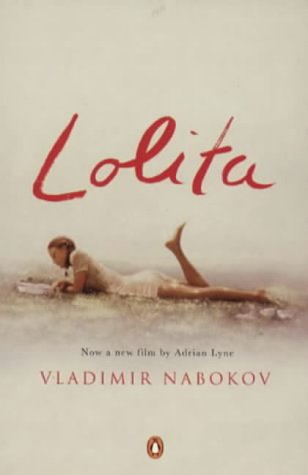
Twice is nice. Reading "Lolita" for a second time should be, I imagine, a second chance to be a detective-- a detective with the assistance of moderate foresight! Now that I know "who did it" I can search back through the pages, back through the narrative of that despicable Humbert Humbert, and uncover the treasured mentions of his arch-foe, Clare Quilty. Possibly even more important than uncovering the culprit (like the one in the manila slip in a game of clue) it will be fascinating to appreciate the way Nabokov crafts the story and the reader along with it. Noticing the sultry scents that mislead the reader can be appreciated for the irresistible "try", like in a game of chess between reader and author.
Reading the story w/o annotations was quite a test of will power. At times (many, many times) I found what seemed to be a typical sentence, nothing hidden, nothing cryptic, but there would be that damned number on the side denoting some meaning or reference important to the novel. I would notice this and probe the sentence, put each word under a microscope, and realize that I had no idea what was being annotated. Like this I would trudge through the work.
The more I reflect on the phenomena of my being an English major for almost 4 years now and seemingly have learned absolutely nothing that helps me read this infuriating text I realize that this is part of reading "Lolita" and perhaps this is what Nabokov's version of didacticism is-- teasing the reader. Provoking the reader with his twists and turns, flips of the tongue and labyrinthine language he is, in fact, molding what he refers to throughout the book as the "learned reader". For the reader to grasp that he/she is missing a lot, perhaps even the bulk of what is important, teases us enough to read more, read deeper, and examine "Lolita" and other texts, under the astute microscope of a specialized scientist and playful puzzle-master. Twice is nice.
*A lovely labyrinth
Subscribe to:
Posts (Atom)
